With New Funding, Sustainable Craft Beverage Program Expands Its Reach
How eco-friendly is your beer? What about your kombucha? Vesela Veleva, faculty and co-director of the Center for Sustainable Enterprise and Regional Competitiveness in UMass Boston’s Department of Management, is helping craft beverage companies and consumers answer that question.
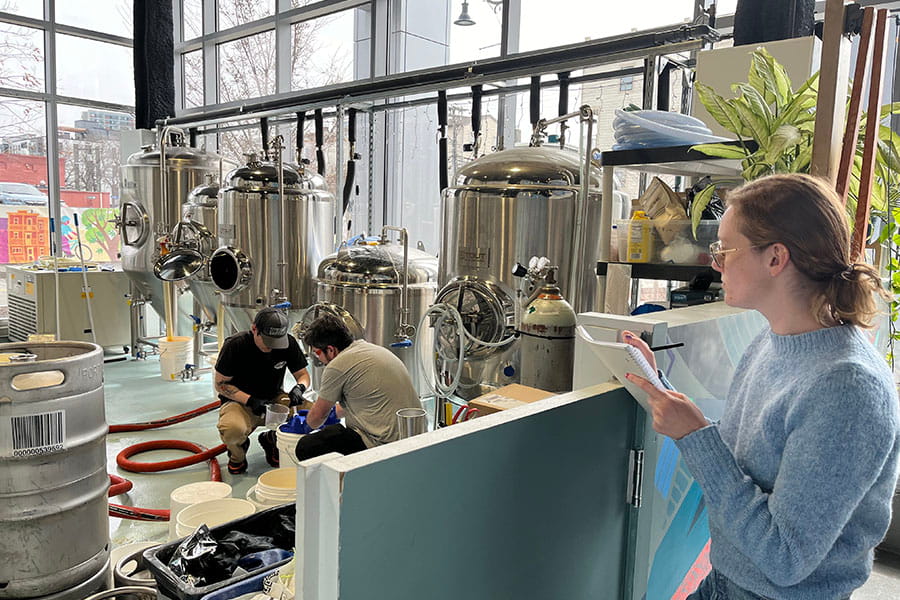
Under Veleva’s leadership, UMass Boston was among the five founding partners of the BetterBev program, which provides resources and recognition for small craft breweries and other craft beverage manufacturers to reduce the environmental impact of their entire manufacturing process, from buying their raw ingredients to serving their customers. Initially, the program was aimed at brewers, but the BetterBev program is expanding, and now also recognizes the makers of other craft beverages.
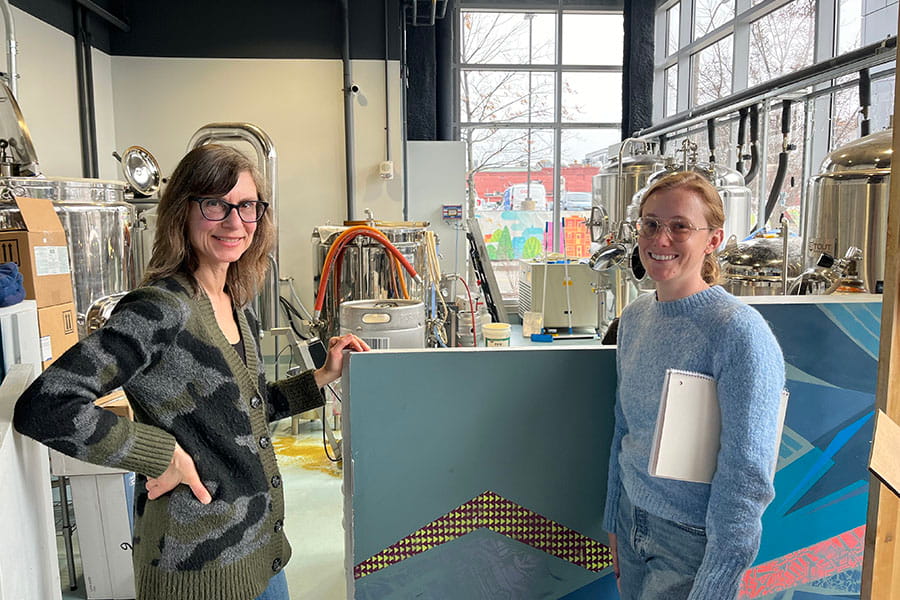
Craft beverage manufacturing can generate a surprising amount of waste. “We don't think of the industry as very polluting, but it has a major impact,” said Veleva. For breweries, growing and transporting the grain and hops, packaging, and refrigerating the beer once it’s complete, requires a great deal of energy. Breweries also typically generate between three and ten gallons of wastewater for every gallon of beer and can produce large quantities of waste from both spent grain and from the beer’s packaging.
According to Veleva’s research, the majority of craft beverage makers are interested in becoming more sustainable (which often reduces costs), but many lack the time, resources, or knowledge to make improvements. BetterBev helps participating businesses make positive changes and get recognized for their efforts.
Changes as simple as insulating their building, or offering to take back used can carriers can save a business money and improve their assessment scores. Because shipping grain and hops from distant distributors generates a large amount of carbon emissions, purchasing raw ingredients from local farmers can reduce a brewery’s carbon footprint, while also helping them to produce distinctive local beers and supporting local farmers. In addition, by running their own taprooms and serving directly to customers, breweries can cut down on waste from packaging. “Packaging and raw materials, according to lifecycle analysis studies, represent the biggest impact of beer consumption,” said Veleva.
Achieving BetterBev recognition starts with an online assessment of a business’s environmental practices. While businesses can now complete the initial assessment by themselves, UMass Boston students have often helped get the process started. “Students are our greatest resource,” said Veleva.
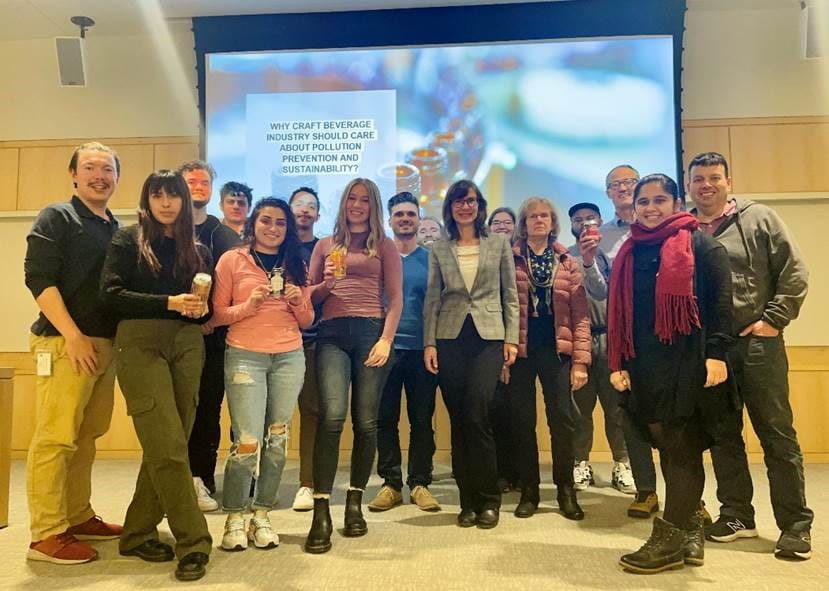
Image By: Kevin Bleau, G'23
As part of their coursework in Veleva’s environmental management classes, graduate and undergraduate students have reached out to local breweries and sat down with head brewers to complete the assessments.
Graduate students from UMass Boston’s MBA program in environmental management, and from the Clean Energy and Sustainability Certificate, have also made major contributions to the BetterBev program. Several graduate assistants on the project became co-authors on peer-reviewed articles and business cases, and at least three former graduate students have gotten jobs in the field of environmental management and sustainability. Working one-on-one with breweries has given these students valuable skills which are an asset in today’s job market.
Since BetterBev was founded in 2022, Veleva, her students, and her colleagues have helped more than 29 breweries in Massachusetts alone gain recognition. Initially, with the help of a grant from the EPA, the program connected and standardized regional green brewing initiatives in several New England states, but it has since grown to recognize beverage producers as far away as Hawaii.
In 2025, the BetterBev program gained access to funds from a second EPA grant. This two-year $350,000 grant allowed BetterBev to offer resources to other craft beverage makers. Veleva has already started working with wineries, a meadery, and a kombucha brewer—and this is just the beginning. Currently, the program is still supported by the EPA’s funding, but Veleva hopes that, in the long run, it will follow in the path of other environmental recognition programs like the U.S. Green Building Council’s LEED program, becoming both widely recognized and self-sustaining.
“We think the recognition of having this label helps consumers differentiate from all these hundreds of breweries… but we haven't tested this hypothesis, so we would like to find out in our future research,” Veleva said.