UMass Boston

Applied Economics MA

Learn to turn data into direction for business organizations.

Request Info Apply

Description of the image

Request Info

Loading...

About the Program

Build advanced skills in the STEM-designated, research-focused Applied Economics MA program at UMass Boston. Emphasizing hands-on experience in applied economic research and analysis, the program explores the methods that shape real-world economic decision-making. Graduate assistantships, faculty mentorship, and career-focused training prepare you for a career in economics, finance, policy, or research, and support continued doctoral study.

Here’s your chance to:

  • Develop expertise in mainstream and heterodox economic theories, strengthen critical thinking, and master applied research methods such as econometrics, survey research, geographic information systems (GIS), and data analysis.
  • Gain real experience as a teaching or research assistant, supporting faculty while fostering skills that strengthen your résumé and professional portfolio.
  • Study in cohorts of 12 to 15, collaborating closely with faculty and classmates. With the program’s flexible and affordable design, full-time students can finish in as little as 12 months, while part-time students balance coursework with employment or other commitments.
0
median annual salary for economists
Bureau of Labor Statistics, 2024
0
of Applied Economics MA alumni are employed
UMass Boston Survey Data, 2020–2022
0
of 2025 cohort identifies as BIPOC
UMass Boston Survey Data, 2025

Graduate student presenting at a wooden podium.

Career Possibilities

Conduct original research through a capstone or thesis and develop professional communication skills by presenting your findings. Graduate with the experience needed for careers as research economists, policy analysts, or for PhD-level work.

Here’s where this degree can take you:

  • Economist
  • Data Analyst
  • Consultant
  • Policy Analyst
  • Research Analyst
  • Economic Journalist
  • Research Associate
  • Senior Data Engineer
  • Data and Visualization Specialist
  • Reporter/Journalist
  • Consumer Insights Manager
Example Employers of Program Graduates
UMass Boston Applied Economics MA alumni launch careers at top companies in Boston and across the country, including:
US Bureau of Economic Analysis Logo
Federal Reserve Bank of Boston Logo
Reuters Logo
McKinsey & Company Logo
Harvard University Center for Education Policy Research Logo
W.E. Upjohn Institute For Employment Research 670x250
FTI Consulting Logo
National Bureau of Economic Research (NBER) Logo

Student Stories

Michelle B.
UMass Boston’s Applied Economics MA opened doors I had never imagined possible. Through rigorous quantitative training, hands-on research and teaching opportunities, alongside close faculty mentorship, I developed the skills and confidence to pursue a career as an economist. UMass Boston connected me to internships and leadership opportunities across the Boston community, experiences that were transformative in shaping my career trajectory.
Michelle B., ’24
Brian M.
One of the program’s greatest strengths is its flexibility for working professionals. While pursuing my degree, I continued to work full-time. The skills I was developing were so immediately applicable that I was promoted while still completing my degree. Beyond the numbers and the data, what truly sets this program apart is the community. I was able to cultivate meaningful, lasting relationships with everyone from the program director and administrative staff to the faculty members.
Brian M., ’23
Michael T.
The program provided me with the skills to excel in the country’s premier doctoral program for heterodox economics. The emphasis on empirical applications is invaluable. Gaining competency in STATA along with practical know-how of statistical modelling was crucial for my success in my PhD coursework. It offered a unique space for exploring alternative paradigms that reach beyond the mainstream orthodoxy. This sets UMass Boston apart at a time when critical inquiry is more important than ever.
Michael T., ’22
Bansari K.
The Applied Economics program at UMass Boston played an important role in shaping my ideas and understanding about the economy. The faculty’s diverse economic perspectives created a rich learning environment and a well-rounded education. Their mentorship strengthened my research and analytical skills for real-world application. From data analysis to communicating complex findings, I continue to use the tools I gained from the program daily in my work as a journalist covering political economy.
Bansari K., ’21

Plan Your Education

How to Apply

Deadlines: 

  • Fall Priority Deadline: April 1
  • Fall Final Deadline: June 15

Application Fee: The nonrefundable application fee is $75. UMass Boston alumni and current students that plan to complete degree requirements prior to graduate enrollment can submit the application without paying the application fee.

Applicants must meet general graduate admission requirements in addition to the program-specific requirements.

Financing Your Education

Estimate Your Program Cost: Get a feel for your expected program costs using the Graduate Program Cost Calculator.

Program Cost Information: Significant on-campus tuition discounts are available to residents of Massachusetts, the other New England states, New York, New Jersey, and Pennsylvania. For more detailed information on costs, visit the Bursar's website to learn more about Regular Session Tuition & Fees for in person courses and Special Price Tuition & Fees for online courses. Please refer to Financial Aid for more information.


Program Details

Applied Economics MA Application Requirements

MA Admission Requirements

Applicants must meet general graduate admission requirements in addition to the following program-specific requirements: 

  • Completion of a course in calculus plus introductory macroeconomics, introductory microeconomics, and economic statistics (all with grades of B or better)
  • Two letters of recommendation from individuals who can assess the applicant’s academic and/or professional preparation for graduate work

BA/MA Admission Requirements (Accelerated Master's Program)

  • Complete at least 75, but not more than 90, undergraduate credits by the application due date
  • Complete one course in college calculus with a grade of B or better
  • Obtain a grade of B or better in introductory microeconomics, introductory macroeconomics, and statistics
  • Take 30 credits and four economics courses in residence at UMass Boston and maintain a minimum 3.0 overall GPA (grade point average)
  • Submit the same admissions documentation as BA-trained applicants to the MA program

Learn more about the Accelerated Master's Program for current UMass Boston undergraduate students.

Curriculum

Required Courses (18 Credits)

  • ECON 601 - Applied Microeconomics 3 Credit(s)
  • ECON 602 - Applied Macroeconomics 3 Credit(s)
  • ECON 610 - Political Economy 3 Credit(s)
  • ECON 650 - Applied Economic Research Practicum 1 Credit(s)
  • ECON 651 - Quantitative Research Methods I 4 Credit(s)
  • ECON 652 - Quantitative Research Methods II 4 Credit(s)

Electives (9 Credits)

Complete at least three of the following courses. At least six credits must be from the approved economic electives list. At least three credits must be from the approved quantitative methods list.

Approved Economics Electives:

  • Any 600-level ECON courses not already required for the program
  • PUBADM 602 - The New England Economic Environment 3 Credit(s)
  • PPOL-G 602 - Political Economy of Class, Race and Gender 3 Credit(s)
  • INTREL 614 - International Political Economy 3 Credit(s)

Approved Quantitative Methods Electives:

  • ENVSCI 623L - Introduction to Geographic Information Systems 4 Credit(s)
  • GERON GR 760 - Policy Analysis Techniques 3 Credit(s)
  • MSIS 680 - Advanced Data Mining 3 Credit(s)
  • SOCIOL 655 - Evaluation Research 3 Credit(s)
  • SOCIOL 660 - Fundamentals of Survey Methodology 3 Credit(s)
  • SOCIOL 661 - Designing and Evaluating Survey Questions 3 Credit(s)
  • SOCIOL 662 - Applied Survey Sampling - Design and Analysis 3 Credit(s)

Research Capstone or Thesis (5 Credits):

Candidates may substitute some or all of the five required credits with independent study credits that result in a capstone of thesis.

  • ECON 698 - Mentored Research Project 1-5 Credit(s)

For more information on curriculum, including course descriptions and degree requirements, visit the Academic Catalog.

Learning Outcomes

  • Acquire advanced understanding of economic theories
  • Develop proficiency in a range of applied economic and policy research methods, including econometrics, survey research, and GIS
  • Locate necessary data to analyze economic phenomena and evaluate economic policies using appropriate quantitative methods and data visualization techniques
  • Sharpen their critical thinking and problem-solving skills by juxtaposing traditional and alternative economic theories, and testing economic theories against observed outcomes
  • Develop and integrate applied economics research skills by designing and conducting dependent original research in their capstone project or thesis
  • Develop their communication and professional skills, including technical writing and public-speaking skills, in presenting their final capstone project or thesis results for an audience of faculty and fellow students
  • Acquire the tools and knowledge to do PhD-level work in economics or related fields, and to work as research economists

Graduation Criteria

Complete 32 credits from ten courses including six required courses, three electives, and a research capstone or thesis.

Capstone: Completion of a research paper and oral presentation.

Statute of limitations: Five years.

Contact

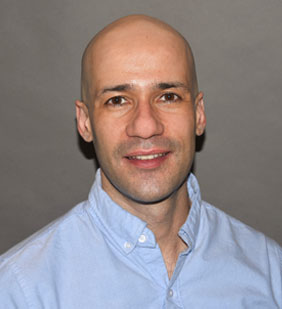
Graduate Program Director Charalampos (Harry) Konstantinidis
konstantinidis@umb.edu
(617) 287-4785

Outreach Coordinator Chloe Manning
chloe.manning@umb.edu

Student writing on the white board in front of other students.

Make an Impact While you Learn

Serve as a teaching and research assistant, supporting faculty projects, leading classroom discussions, and helping design and analyze research. Economics students also contribute to published work in top journals, including the Gastón Institute for Latino Community Development and Public Policy, coauthoring studies on housing, labor, demographics, and community resilience.

Program Faculty

Container ship.

Academic Community

Explore the department and college that supports your journey in Applied Economics.